Microtome cryostat YR426-1
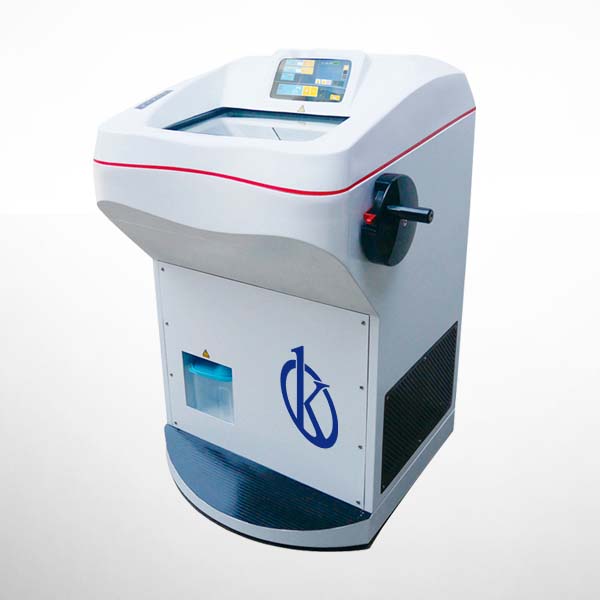
The Cryostat Microtome YR426-1 is an essential tool in the medical field for the rapid analysis of pathological sections of human, animal, and plant tissues. This advanced device is widely used in hospitals, medical schools, forensic medicine, and animal and plant research units. The YR426-1 consists of four main parts: the top part houses the microcomputer control and panel operation, the central part includes a low-temperature freezer for rapid tissue freezing, the bottom part contains the compressor cooling unit, and the rear part handles mechanical transmission and motor drive. The 10-inch color LCD touchscreen of the YR426-1 provides a clear and user-friendly interface.
This page provides an overview of the Microtome cryostat YR426-1, including selection criteria, investment factors, operational advantages and maintenance recommendations. The aim is to support an informed decision before requesting a quotation.
This Kalstein model is available for laboratories in Sweden, with selection criteria adapted to local purchasing, installation and support conditions.
Key factors to consider
Before selecting the Microtome cryostat YR426-1, confirm workflow, available space, required accessories and installation conditions. This prevents oversizing the purchase and helps prepare a more accurate quotation.
In practical applications, the Cryostat Microtome YR426-1 is used to obtain rapid and precise pathological sections in histology and pathology laboratories. The dual compressors enable efficient cooling of the freezing box, freezing table, knife holder, sample holder, and tissue press. Additionally, the device features an ultraviolet disinfection system to ensure a hygienic working environment.
For the market in Sweden, evaluation should consider local context such as biotech and life sciences clusters, EU CE marking and match the product to the real workload of the laboratory.
Market price range
The YR426-1 cryostat microtome is priced between 19300 and 20000 USD. This investment reflects the advanced technology and precise features of the device. Therefore, it is a valuable option for laboratories and hospitals that require fast, high-quality tissue analysis results.
The final price may vary according to configuration, accessories, logistics, warranty and territorial availability. Compare the technical sheet with the real laboratory workload before confirming the investment.
In Sweden, budget comparison should include CE references, 230V/50Hz power conditions, accessories, logistics and after-sales support.
Value for money
Advantages: Precise temperature control thanks to advanced microprocessors. 10-inch color LCD touchscreen for easy operation. Hibernation function for energy savings. Dual compressors for efficient cooling. Self-check function for the temperature sensor. Disadvantages: It may require a significant initial investment. Its size and weight can be challenging for laboratories with limited space.
Value for money should be reviewed together with equipment stability, after-sales support, technical documentation and expected service life. A well-matched selection reduces downtime and improves return on investment.
Advantages and disadvantages
In practical applications, the Cryostat Microtome YR426-1 is used to obtain rapid and precise pathological sections in histology and pathology laboratories. The dual compressors enable efficient cooling of the freezing box, freezing table, knife holder, sample holder, and tissue press. Additionally, the device features an ultraviolet disinfection system to ensure a hygienic working environment.
Main advantages include specialized application, integration with laboratory routines and accessory configuration. Limitations may include installation requirements, user training and preventive maintenance to preserve performance.
Expected lifespan based on use and maintenance
Model YR426-1 (current) Chamber Temperature 10 ℃ ~ -50 ℃ Freezing Shelf Temperature 0℃ ~ -50℃ Sample Holder Temperature Control Range 10 ℃ ~ -50 ℃ Additional Semiconductor Cooling in Freezer -60 ℃ Number of Freezing Stations 36 pieces Number of Peltier Elements 8 pieces Fast Cooling Semiconductor Working Time 15 minutes Maximum Sample Size 55 mm × 80 mm Vertical Stroke 65 mm Horizontal Stroke 22 mm Electric Feed Speed 0.9 mm/s, 0.45 mm/s Disinfection Method ultraviolet Section Thickness Range 0.5 μm~100 μm Adjustable 0.5 μm~5 μm Increment 0.
Service life depends on usage frequency, cleaning, storage, calibration when applicable and adherence to technical recommendations. A structured maintenance plan helps preserve accuracy, safety and operational continuity.
Support and spare-parts availability oriented to Sweden helps preserve service continuity and plan preventive maintenance without extended downtime.
Specifications table for the Microtome cryostat YR426-1
Microtome cryostat YR426-1
La máquina se compone principalmente de cuatro partes.
- La parte superior de la máquina es una parte de control de microcomputadora y operación de panel, visualización de temperatura y parte de visualización de estado de trabajo.
- La parte central es un congelador de baja temperatura, que es la parte para la congelación rápida del tejido de biopsia y la operación de corte.
- La parte inferior es la parte de refrigeración de la unidad compresora.
- Las partes central y trasera son partes de transmisión mecánica y de accionamiento del motor.
Ámbito de aplicación
Sección de patología celular, sección de fibras biológicas, etc.
Especificaciones técnicas
| Model | YR426-1 (current) |
| Chamber Temperature | 10 ℃ ~ -50 ℃ |
| Freezing Shelf Temperature | 0℃ ~ -50℃ |
| Sample Holder Temperature Control Range | 10 ℃ ~ -50 ℃ |
| Additional Semiconductor Cooling in Freezer | -60 ℃ |
| Number of Freezing Stations | 36 pieces |
| Number of Peltier Elements | 8 pieces |
| Fast Cooling Semiconductor Working Time | 15 minutes |
| Maximum Sample Size | 55 mm × 80 mm |
| Vertical Stroke | 65 mm |
| Horizontal Stroke | 22 mm |
| Electric Feed Speed | 0.9 mm/s, 0.45 mm/s |
| Disinfection Method | ultraviolet |
| Section Thickness Range | 0.5 μm~100 μm Adjustable 0.5 μm~5 μm Increment 0.5 μm 5 μm~20 μm Increment 1 μm 20 μm~40 μm Increment 2 μm |
| Cutting Thickness Range | 10 μm~600 μm Adjustable 10 μm~50 μm Increment 5 μm 50 μm~100 μm Increment 10 μm 100 μm~600 μm Increment 50 μm |
| Sample Retraction | 0~100μm Adjustable, Increment 5μm |
| Additional Advantages | |
| The 10-inch color LCD touchscreen can separately display the total number of cuts and the total thickness of the cut, the thickness of the cut, the specimen retraction value, temperature control, date, time, temperature, automatic shutdown switch, defrosting, and other functions. The operation screen can be configured to switch between the operation interface in Chinese and English, which is convenient for different users around the world. | |
| Humanized hibernation function: after selecting the hibernation state, the temperature of the freezer compartment can be automatically controlled between -1 and -9 °C. Once hibernation is canceled, the cutting temperature can be reached in 15 minutes. | |
| Imported dual compressors cool the freezing box, freezing table, blade holder, sample holder, and tissue press at five points respectively. | |
| Equipped with a rubber instrument shelf and waste box. | |
| X-axis 360 °, Y-axis 12 ° universal rotation, pressure tissue chuck, easier and faster to install the organization | |
| The blade holder is equipped with a blade pusher and a blade guard to cover the entire length of the blade, which safely protects the user. | |
| Anti-adhesive tissue flattening device, with sample cooling, the temperature can reach -50 °, which is convenient for freezing tissue and saving operation time | |
| The temperature sensor self-check function can automatically detect the operating status of the sensor | |
| Volant positioning 360° locking function at any point | |
| Single-layer heated glass door, effectively preventing condensation of nebulized water | |
The sample holder moves to the limit position and automatically returns to the initial position function
Technical Specifications | |
| Dimension Size (mm) | 700×760×1160mm |
| Weight | 135 KG |
Products related to model YR426-1

YR06699-YR06700 Slide Drying Cabinet
Ver producto
Tissue Inclusion Center YR445
Ver producto
Inclusion Center YR439-1
Ver producto
YR440B Biological Tissue Freezer
Ver producto
Biological tissue freeze embedding machine {6 liters, with cooling plate} YR448
Ver producto
Tissue Embedding & Cooling System YR441
Ver producto
Tissue Embedding & Cooling System YR447
Ver producto
Tissue Embedding Center YR439
Ver productoFrequently Asked Questions about the Microtome cryostat YR426-1
What is the temperature range of the YR426-1 chamber?
The temperature range of the YR426-1 chamber varies between 10℃ and -50℃.
Is the YR426-1 easy to operate and maintain?
Yes, the intuitive design and touchscreen make both operation and maintenance straightforward.
How do I choose the right microtome cryostat yr426-1 for my laboratory?
Selection should start from workload, critical technical parameters, available space and frequency of use. Kalstein can support the comparison between operational needs, budget and maintenance requirements to avoid choosing equipment that is oversized or insufficient.
What should I review before requesting a quotation?
Review the model, technical specifications, required accessories, electrical conditions, consumables, delivery timing and installation needs. With this information, the quotation can be prepared more accurately and aligned with the laboratory workflow.
Does Kalstein provide guidance for this type of equipment?
Yes. The commercial and technical team can support product evaluation, explain differences between models, answer application questions and advise on preventive maintenance, spare parts and documentation required for a secure purchase.
What maintenance helps extend the equipment lifespan?
Follow the manufacturer manual, perform regular cleaning, verify calibrations or controls when applicable, avoid workload abuse and keep maintenance records. Stable use and preventive routines reduce failures and improve operational continuity.