Meter YR01820
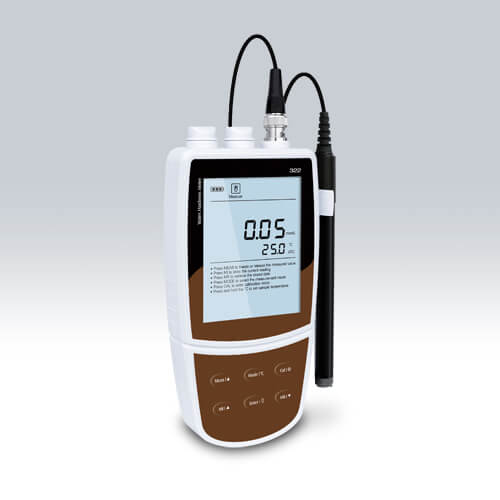
The Multi-parameter portable water quality meter YR01820 combines technical features for laboratory routines, operational continuity and a coherent equipment selection process.
This page provides an overview of the Multi-parameter portable water quality meter YR01820, including selection criteria, investment factors, operational advantages and maintenance recommendations. The aim is to support an informed decision before requesting a quotation.
This Kalstein model is available for laboratories in Sweden, with selection criteria adapted to local purchasing, installation and support conditions.
Key factors to consider
Before selecting the Multi-parameter portable water quality meter YR01820, confirm workflow, available space, required accessories and installation conditions. This prevents oversizing the purchase and helps prepare a more accurate quotation.
Its use is oriented to laboratory routines that require observation, control and operational continuity.
For the market in Sweden, evaluation should consider local context such as biotech and life sciences clusters, EU CE marking and match the product to the real workload of the laboratory.
Market price range
The investment should be evaluated according to configuration, required accessories, installation conditions and available technical support.
The final price may vary according to configuration, accessories, logistics, warranty and territorial availability. Compare the technical sheet with the real laboratory workload before confirming the investment.
In Sweden, budget comparison should include CE references, 230V/50Hz power conditions, accessories, logistics and after-sales support.
Value for money
Equipment value depends on operational stability, required accuracy, ease of maintenance and accessory availability.
Value for money should be reviewed together with equipment stability, after-sales support, technical documentation and expected service life. A well-matched selection reduces downtime and improves return on investment.
Advantages and disadvantages
Its use is oriented to laboratory routines that require observation, control and operational continuity.
Main advantages include specialized application, integration with laboratory routines and accessory configuration. Limitations may include installation requirements, user training and preventive maintenance to preserve performance.
Expected lifespan based on use and maintenance
Model YR01820 (current) pH Range -2.000 to 20.000pH Resolution 0.001, 0.01, 0.1pH, selectable Accuracy ±0.002pH Calibration points 1 to 5 points pH buffer options USA, NIST, DIN, 2 custom buffers ORP Range ±1999.9mV Resolution 0.1, 1mV, selectable Accuracy ±0.2mV Calibration points 1 point Measurement modes Relative or absolute MV Ionic concentration Range 0.001 to 19999 (depending on the USE range) Resolution 0.001, 0.01, 0.1, 1 Accuracy ± 0.5% full scale (monovalent), ± 1% full scale (divalent) Calibration points 2 to 5 points Calibration solutions 0.001, 0.01, 0.1, 1, 10, 100, 1000, 10000 Units of measure ppm, mg/L, mol/L, mmol/L Conductivity Range 0.01 to 20.00, 200.0, 2000µS/cm, 20.00, 200.0mS/cm Resolution 0.001, 0.01, 0.1, 1 Accuracy ±0.5% F.S.
Service life depends on usage frequency, cleaning, storage, calibration when applicable and adherence to technical recommendations. A structured maintenance plan helps preserve accuracy, safety and operational continuity.
Support and spare-parts availability oriented to Sweden helps preserve service continuity and plan preventive maintenance without extended downtime.
Specifications table for the Meter YR01820
Meter YR01820
Modo pH
- El medidor de calidad del agua multiparamétrico está equipado con una pantalla LCD retroiluminada.
- Calibración de 1 a 5 puntos con reconocimiento automático para búferes USA, NIST y DIN.
- El diagnóstico automático del electrodo muestra la pendiente y la compensación del pH.
Modo ORP
- La calibración de compensación de 1 punto permite ajustar el valor mostrado a un estándar conocido.
- Los modos de milivoltios relativos y absolutos aseguran mediciones de ORP confiables.
Modo de concentración de iones
- Se pueden seleccionar de 2 a 5 puntos de calibración, incluidos los 8 puntos de concentración.
- La lectura directa de la concentración de iones simplifica el proceso de medición.
- El diagnóstico automático de electrodos muestra los puntos de calibración y las pendientes.
- Unidades de concentración seleccionables (ppm, mg / L, mol / L, mmol / L) y valencia iónica.
Modos de conductividad / TDS / salinidad / resistividad
- Calibración de 1 a 5 puntos con reconocimiento automático de estándares de conductividad.
- Constante de celda seleccionable (K = 0.1 / 1/10), temperatura de referencia (20/25 ° C), factor TDS, compensaciones lineales y de agua pura, agua de mar y modos prácticos de medición de salinidad.
Modo de oxígeno disuelto
- Calibración de 1 o 2 puntos utilizando agua saturada de aire o una solución de oxígeno cero.
- Las compensaciones de salinidad y presión barométrica eliminan el error de medición.
Otras características
- La compensación automática de temperatura asegura lecturas precisas en todo el rango.
- La función de lectura automática detecta y bloquea el punto final de la medición.
- La alarma de calibración vencida solicita al usuario que calibre el medidor con regularidad.
- El apagado automático conserva eficazmente la vida útil de la batería.
- El menú de configuración permite configurar el número de puntos de calibración, criterios de estabilidad, unidad de temperatura , fecha y hora, etc.
- La función de reinicio reanuda automáticamente todos los ajustes a los valores predeterminados de fábrica.
- La memoria ampliada almacena o recupera hasta 500 conjuntos de datos.
- La interfaz de comunicación USB es fácil de transferir datos a la PC.
- El esquema de energía multimodo (baterías, adaptador de corriente y puerto USB) asegura que el uso del medidor sea fluido.
Especificaciones Técnicas
| Model | YR01820 (current) |
| pH | |
| Range | -2.000 to 20.000pH |
| Resolution | 0.001, 0.01, 0.1pH, selectable |
| Accuracy | ±0.002pH |
| Calibration points | 1 to 5 points |
| pH buffer options | USA, NIST, DIN, 2 custom buffers |
| ORP | |
| Range | ±1999.9mV |
| Resolution | 0.1, 1mV, selectable |
| Accuracy | ±0.2mV |
| Calibration points | 1 point |
| Measurement modes | Relative or absolute MV |
| Ionic concentration | |
| Range | 0.001 to 19999 (depending on the USE range) |
| Resolution | 0.001, 0.01, 0.1, 1 |
| Accuracy | ± 0.5% full scale (monovalent), ± 1% full scale (divalent) |
| Calibration points | 2 to 5 points |
| Calibration solutions | 0.001, 0.01, 0.1, 1, 10, 100, 1000, 10000 |
| Units of measure | ppm, mg/L, mol/L, mmol/L |
| Conductivity | |
| Range | 0.01 to 20.00, 200.0, 2000µS/cm, 20.00, 200.0mS/cm |
| Resolution | 0.001, 0.01, 0.1, 1 |
| Accuracy | ±0.5% F.S. |
| Calibration points | 1 to 5 points |
| Calibration solutions | 10µS, 84µS, 1413µS, 12.88mS, 111.8mS |
| Temperature coefficient | Linear (0.0 to 10.0% / °C), pure water |
| Reference temperature | 20/25°C |
| Cell constant | K = 0.1, 1, 10 or custom |
| TDS | |
| Range | 0.00 to 10.00, 100.0, 1000ppm, 10.00, 200.0ppt |
| Resolution | 0.01, 0.1, 1 |
| Accuracy | ±1% F.S. |
| TDS factor | 0.1 to 1.0 (default 0.5) |
| Salinity | |
| Range | 0.00 to 80.00ppt, 0.00 to 42.00psu |
| Resolution | 0.01 |
| Accuracy | ±1% F.S. |
| Resistivity | |
| Range | 0.00 to 20.00MΩ |
| Resolution | 0.01 |
| Accuracy | ±1% F.S. |
| Dissolved oxygen | |
| DO Range | 0.00 to 20.00mg/L |
| Resolution | 0.01, 0.1mg/L, selectable |
| Accuracy | ±0.2mg/L |
| % Oxygen saturation | 0.0 to 200.0% |
| Resolution | 0.1, 1%, selectable |
| Accuracy | ±2.0% |
| Calibration points | 1 or 2 points |
| Pressure correction | 60.0 to 112.5 kPa / 450 to 850 mmHg, manual |
| Salinity correction | 0.0 to 50.0 g / L, manual |
| Temperature | |
| Range | 0 to 105°C/32 to 221°F |
| Resolution | 0.1°C/0.1°F |
| Accuracy | ±0.5°C/±0.9°F |
| Compensation calibration | 1 point |
| Calibration range | Reading ± 10 °C |
| General specifications | |
| Temperature compensation | 0 to 100 °C / 32 to 212 °F, manual or automatic |
| Stability criteria | Low or high |
| Calibration expiration alarm | 1 to 31 days or off |
| Auto power off | 10, 20 or 30 minutes after pressing the last key |
| Memory | Stores up to 500 data sets |
| Output | USB communication interface |
| Connector | BNC, mini-DIN 6-pin, 3.5 mm jack connector |
| Monitor | Custom LCD (80 × 60 mm) |
| Power | 3 AA 1.5 V batteries or DC5V power adapter |
| Battery life | Approximately 150 hours (turn off backlight) |
| Dimensions | 170(L)×85(W)×30(H)mm |
| Weight | 300g |
| Order code | Accessories |
| YR01820 | pH Electrode E201-BNC |
| Conductivity Electrode CON-1 | |
| Dissolved Oxygen Electrode DO100 | |
| Temperature Probe TP-10K | |
| pH4.01 / 7.00 / 10.01 buffer sachets | |
| Conductivity standards 84 µS / cm, 1413 µS / cm, 12.88 mS / cm | |
| DO electrolyte solution | |
| DO membrane cap | |
| Carrying case | |
Frequently Asked Questions about the Meter YR01820How do I choose the right Meter YR01820 for my laboratory?Selection should start from workload, critical technical parameters, available space and frequency of use. Kalstein can support the comparison between operational needs, budget and maintenance requirements to avoid choosing equipment that is oversized or insufficient. What should I review before requesting a quotation?Review the model, technical specifications, required accessories, electrical conditions, consumables, delivery timing and installation needs. With this information, the quotation can be prepared more accurately and aligned with the laboratory workflow. Does Kalstein provide guidance for this type of equipment?Yes. The commercial and technical team can support product evaluation, explain differences between models, answer application questions and advise on preventive maintenance, spare parts and documentation required for a secure purchase. What maintenance helps extend the equipment lifespan?Follow the manufacturer manual, perform regular cleaning, verify calibrations or controls when applicable, avoid workload abuse and keep maintenance records. Stable use and preventive routines reduce failures and improve operational continuity. Contact Us | |