Patient Monitor YR02177
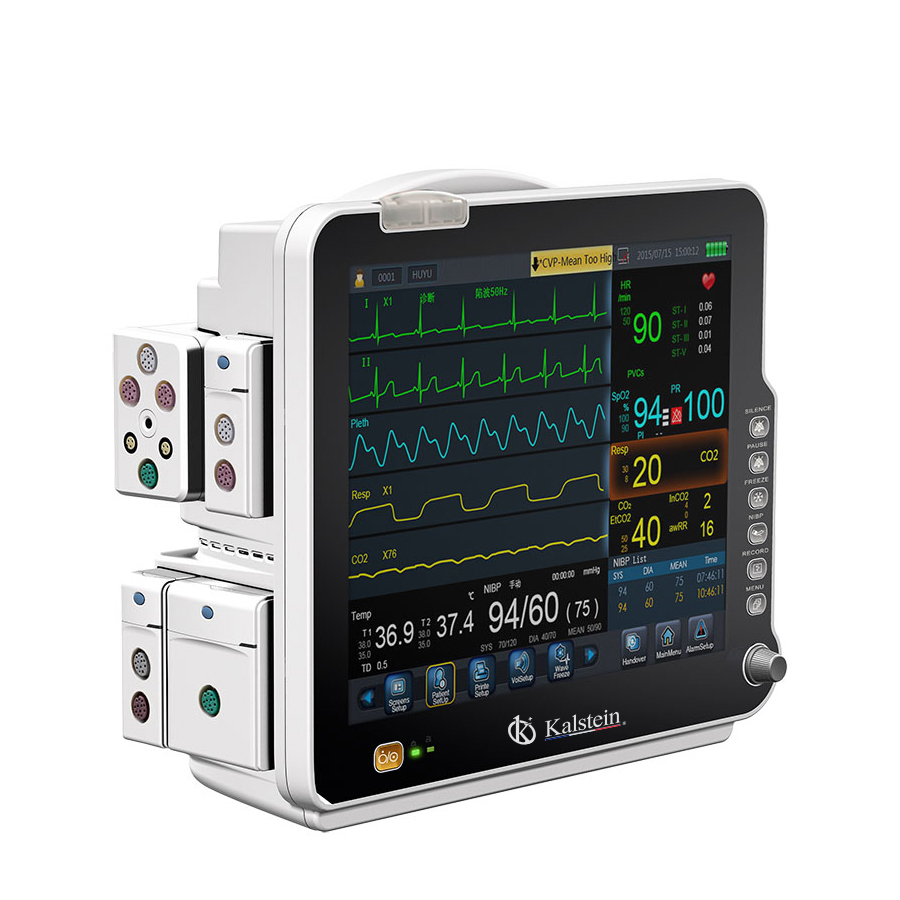
Monitor de paciente con pantalla LCD de 17 pulgadas y parámetros modulares. Puede utilizarse en UCI y en quirófano. Parámetros estándar: ECG, SPO2, TEMP, NIBP, RESP, PR/HR Configuración estándar: ECG de 5 derivaciones, RESP, Dual-Temp, SpO2, NIBP Opcional: Masimo/Nellcor SpO2, Dual-IBP, AG, C.O., BIS, ECG de 3/12 derivaciones, Suntech NIBP, EtCO2, Registrador térmico, ICG, Carro, Soporte de pared
This page provides an overview of the Patient Monitor YR02177, including selection criteria, investment factors, operational advantages and maintenance recommendations. The aim is to support an informed decision before requesting a quotation.
This Kalstein model is available for laboratories in Sweden, with selection criteria adapted to local purchasing, installation and support conditions.
Key factors to consider
Before selecting the Patient Monitor YR02177, confirm workflow, available space, required accessories and installation conditions. This prevents oversizing the purchase and helps prepare a more accurate quotation.
Its use is oriented to laboratory routines that require observation, control and operational continuity.
For the market in Sweden, evaluation should consider local context such as biotech and life sciences clusters, EU CE marking and match the product to the real workload of the laboratory.
Market price range
The investment should be evaluated according to configuration, required accessories, installation conditions and available technical support.
The final price may vary according to configuration, accessories, logistics, warranty and territorial availability. Compare the technical sheet with the real laboratory workload before confirming the investment.
In Sweden, budget comparison should include CE references, 230V/50Hz power conditions, accessories, logistics and after-sales support.
Value for money
Equipment value depends on operational stability, required accuracy, ease of maintenance and accessory availability.
Value for money should be reviewed together with equipment stability, after-sales support, technical documentation and expected service life. A well-matched selection reduces downtime and improves return on investment.
Advantages and disadvantages
Its use is oriented to laboratory routines that require observation, control and operational continuity.
Main advantages include specialized application, integration with laboratory routines and accessory configuration. Limitations may include installation requirements, user training and preventive maintenance to preserve performance.
Expected lifespan based on use and maintenance
Model YR02177 (current) ECG Input 3 leads or 5 selectable leads 3 conductor cable: RA; LA; LL or R; L; F 5 conductor cable: RA; LA; RL; LL; V or R; L; N; F; C Potential customer selection 3 leads: I, II, III 5 leads: I, II, III, AVR, AVL, AVF, V ECG waveform 2 channels Gain selection x 0.25, x 0.5, x 1, x 2, x 4 Automatic Sweep speed 12.5 mm/s, 25 mm/s, 50 mm/s Heart rate for newborns 15-350 BPM Heart rate for adults / pediatric 15-300 BPM Accuracy 1 lpm or 1%, whichever is greater Resolution 1 lpm Filter Diagnostic mode: 0.05-100Hz Monitor mode: 0.5-40Hz Surgical mode: 1.0-25Hz Protection Supports voltage of 5000VAC / 50Hz in isolation Against electrosurgical interference and defibrillation Alarm range Newborn: 15-350 bpm Adult / pediatric: 15-300 BPM Measurement range -2.0mv to 2.
Service life depends on usage frequency, cleaning, storage, calibration when applicable and adherence to technical recommendations. A structured maintenance plan helps preserve accuracy, safety and operational continuity.
Support and spare-parts availability oriented to Sweden helps preserve service continuity and plan preventive maintenance without extended downtime.
Specifications table for the Patient Monitor YR02177
Patient Monitor YR02177
- Monitor de paciente con pantalla LCD de 17 pulgadas y parámetros modulares. Puede utilizarse en UCI y en quirófano.
- Parámetros estándar: ECG, SPO2, TEMP, NIBP, RESP, PR/HR
- Configuración estándar: ECG de 5 derivaciones, RESP, Dual-Temp, SpO2, NIBP
- Opcional: Masimo/Nellcor SpO2, Dual-IBP, AG, C.O., BIS, ECG de 3/12 derivaciones, Suntech NIBP, EtCO2, Registrador térmico, ICG, Carro, Soporte de pared
| Model | YR02177 (current) |
| ECG | |
| Input | 3 leads or 5 selectable leads |
| 3 conductor cable: RA; LA; LL or R; L; F | |
| 5 conductor cable: RA; LA; RL; LL; V or R; L; N; F; C | |
| Potential customer selection | 3 leads: I, II, III |
| 5 leads: I, II, III, AVR, AVL, AVF, V | |
| ECG waveform | 2 channels |
| Gain selection | x 0.25, x 0.5, x 1, x 2, x 4 Automatic |
| Sweep speed | 12.5 mm/s, 25 mm/s, 50 mm/s |
| Heart rate for newborns | 15-350 BPM |
| Heart rate for adults / pediatric | 15-300 BPM |
| Accuracy | 1 lpm or 1%, whichever is greater |
| Resolution | 1 lpm |
| Filter | Diagnostic mode: 0.05-100Hz |
| Monitor mode: 0.5-40Hz | |
| Surgical mode: 1.0-25Hz | |
| Protection | Supports voltage of 5000VAC / 50Hz in isolation |
| Against electrosurgical interference and defibrillation | |
| Alarm range | Newborn: 15-350 bpm |
| Adult / pediatric: 15-300 BPM | |
| Measurement range | -2.0mv to 2.0mv |
| Alarm range | -2.0mv to 2.0mv |
| Arrhythmia analysis | YES |
| Alarm | YES, audible and visual alarm, recordable event |
| Rhythm detection | yes |
| Drug dose calculation | yes |
| Standby mode | yes |
| Respiration | |
| Method | Thoracic impedance or EtCO2 |
| Measurement range | Newborn / pediatric: 0 ~ 150 rpm |
| Adult: 0-120 rpm | |
| Apnea alarm | No alarm, 1 Os, 15 s, 20 s, 25 s, 30 s, 35 s, 40 s selectable |
| Alarm | Yes, audible and visual alarm, recoverable alarm events |
| NIBP | |
| Method | Oscillometric |
| Measurement modes | Manual / Automatic / Continuous |
| Displayed parameters | Systolic, diastolic, and MAP (mean arterial pressure) |
| Automatic measurement calibration | Adjustable |
| Unit of measurement | mmHg / kPa selectable |
| Type of measurement | Systolic, diastolic, mean |
| Systolic pressure range | Adult: 40-270 mmHg |
| Pediatric: 40-200 mmHg | |
| Newborn: 40-135 mmHg | |
| Diastolic pressure range | Adult: 10-210 mmHg |
| Pediatric: 10-150 mmHg | |
| Newborn: 10-100 mmHg | |
| Mean pressure range | Adult: 20-230 mmHg |
| Pediatric: 20-110 mmHg | |
| Newborn: 20-110 mmHg | |
| Accuracy | ± 6 mmHg |
| Resolution | 1 mmHg |
| Alarm | Systolic, diastolic, mean |
| Model | YR02177 | |
ECG | Main mode | 5 leads (RA, LA, LL, RL, V) |
| Connection method | I, II, III, AVR, AVL, AVF, V | |
| Lead Mode | 3 leads (RA, LA, LL) | |
| Connection method | I, II, III | |
| Waveform | 1ch | |
| Gain | x250, x500, x1000, x2000 | |
| HR Range | Adult: 15~300bpm | |
| Neo/Ped | 15~350bpm | |
| Accuracy | ±1% or ±1bpm | |
| Resolution | 1bpm | |
| Sensitivity | 200(uVp-p) | |
| Differential input impedance | ≥5MΩ | |
| ST segment Monitoring Range | ||
| Measurement range | -2.0~+2.0mV | |
| Measurement accuracy | -0.8mV~+0.8mV | |
Heart Rate | Measurement range | 10~300bpm |
| Accuracy | ±1bpm | |
| Resolution | 1bpm | |
| Sensitivity | 200UVp-p | |
Respiration | Method | Impedance between R-F(RA-LL) |
| Differential input impedance | 2.0MΩ | |
| Measuring impedance range | 0.3~3.0 MΩ | |