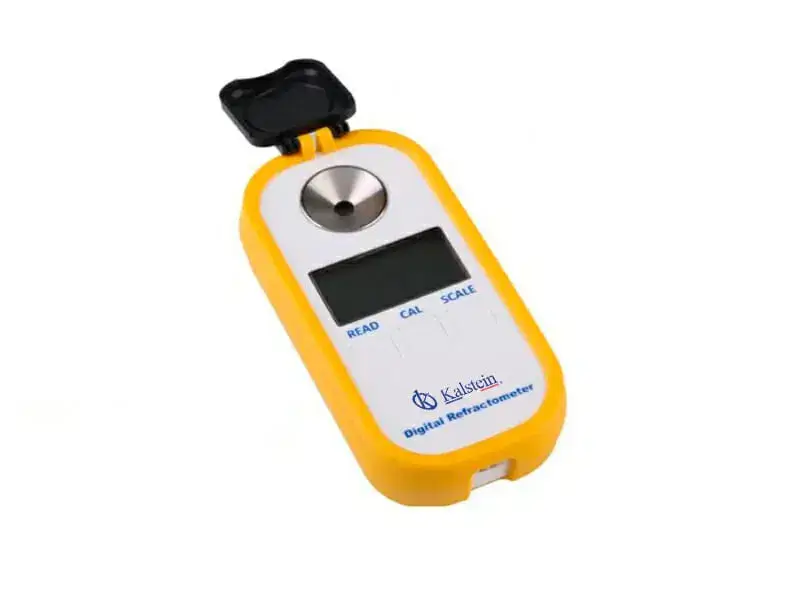
Common Mistakes and How to Avoid Them in Daily Operation of Digital BRIX+ Salinity Refractometers 2026
Digital BRIX+ Salinity Refractometers are crucial instruments in laboratories, especially in food processing, beverage production, and environmental testing. Understanding how to use them effectively and avoiding common pitfalls can significantly enhance the accuracy of measurements. This guide will delve into various aspects of using these refractometers, from their applications to practical workflows, focusing on best practices and error avoidance.
What is it used for in 2026
In 2026, Digital BRIX+ Salinity Refractometers are essential tools for measuring the concentration of soluble solids, primarily sugars, in aqueous solutions. They are widely used in industries such as:
- Food and Beverage: To assess sugar content in fruit juices, syrups, and purees.
- Aquaculture: For measuring salinity levels in seawater and fish farming environments.
- Chemical Labs: For determining the refractive index and density of various solutions.
The ability to quickly and accurately measure these parameters helps ensure product quality and compliance with industry standards.
History and evolution of the technology
The technology behind refractometers has evolved significantly since its inception. Early models were purely optical, relying on manual readings. With advancements in digital technology, the Digital BRIX+ Salinity Refractometer emerged, allowing for:
- Enhanced accuracy through automatic temperature compensation (ATC).
- Improved readability and ease of use with digital displays.
- Broader measurement ranges suitable for various applications.
This evolution has made refractometers indispensable in modern laboratories, where precision and efficiency are paramount.
How to use it step by step
Using a Digital BRIX+ Salinity Refractometer effectively involves several key steps:
- Preparation: Ensure the device is clean and calibrated. Use distilled water to check calibration.
- Sample Collection: Obtain a representative sample of the solution to be measured.
- Measurement: Place a few drops of the sample on the prism and close the cover.
- Reading: Wait for the reading to stabilize and record the value displayed on the screen.
- Cleaning: Clean the prism with distilled water after use to prevent contamination.
Following these steps can help maintain accuracy and prolong the device's lifespan.
Best techniques and protocols
To optimize the use of Digital BRIX+ Salinity Refractometers, consider the following techniques and protocols:
- Always use distilled or deionized water for cleaning and calibrating.
- Perform regular maintenance checks to ensure all components are functioning correctly.
- Document readings and calibrations systematically to identify trends or issues.
- Train all personnel on proper usage to minimize errors.
Implementing these protocols will enhance the reliability of results.
Practical applications by laboratory type
Digital BRIX+ Salinity Refractometers have versatile applications across various laboratory types, including:
- Food and Beverage Labs: Measuring sugar concentrations in beverages to ensure flavor consistency.
- Aquatic Research Facilities: Monitoring salinity levels for optimal fish health.
- Chemical Analysis Laboratories: Evaluating the purity of chemical solutions through refractive index measurements.
Each application requires specific protocols tailored to the laboratory's needs.
Regulations, standards and certifications
Using Digital BRIX+ Salinity Refractometers requires adherence to various regulations and standards. Key considerations include:
- Compliance with ISO standards for measuring sugar content and salinity.
- Regular calibration and certification to maintain laboratory accreditation.
- Documentation of measurement procedures for quality assurance.
Staying informed about relevant regulations ensures the credibility of laboratory operations.
Comparison with alternative technologies
While Digital BRIX+ Salinity Refractometers are valuable tools, alternative technologies like hydrometers and digital density meters exist. Key comparisons include:
- Precision: Refractometers generally offer greater accuracy for sugar concentrations than hydrometers.
- Speed: Digital refractometers provide quick readings, often faster than other methods.
- Range: Some refractometers can measure both sugar and salinity, whereas others may be limited to one metric.
Understanding these differences helps laboratories choose the right tool for their specific applications.
Comparison of available models
| Model | Best for | Key specs | Recommended use case |
|---|---|---|---|
| YR05961 | Brix Measurement | 0-50%, ±0.2% | Measuring sugar levels in fruit juice. |
| YR05962 | Salinity Measurement | 0-280‰, ±0.2% | Assessing salinity in aquaculture. |
| YR05963 | Salinity Measurement | 0-280‰, ±2‰ | General salinity testing in marine biology. |
| YR05964 | Density Measurement | 1.000-1.217, ±0.002 | Determining solution density in chemistry labs. |
| YR05965 | Refractive Index | 1.3330-1.4200nD, ±0.0003nD | Evaluating purity of chemical solutions. |
Common mistakes and how to avoid them
Several common mistakes can lead to inaccurate measurements when using Digital BRIX+ Salinity Refractometers:
- Failing to calibrate: Always calibrate your refractometer before use to ensure accuracy.
- Not cleaning between samples: Residual liquids can contaminate results; clean the prism thoroughly.
- Ignoring temperature effects: Remember that temperature can affect readings; use automatic temperature compensation effectively.
- Improper sample size: Ensure enough sample is placed on the prism for an accurate reading.
Avoiding these mistakes is critical for obtaining reliable data in laboratory settings.
Maintenance, calibration and good practices 2026
Proper maintenance and calibration are essential to ensure the longevity and accuracy of Digital BRIX+ Salinity Refractometers:
- Perform calibration checks with standard solutions regularly.
- Store the device in a protective case when not in use.
- Use only distilled or deionized water for cleaning to prevent residue build-up.
Good practices also include documenting maintenance schedules and ensuring that all laboratory personnel are trained on the proper use of refractometers.
Cost-benefit analysis 2026
Investing in Digital BRIX+ Salinity Refractometers provides significant benefits:
- Cost Efficiency: Their accuracy reduces waste and improves product quality, saving money in the long run.
- Time Savings: Quick readings streamline laboratory workflows, allowing for more samples to be processed.
- Versatility: Their ability to measure multiple parameters means fewer devices are needed.
A thorough cost-benefit analysis will reveal that these benefits often outweigh the initial investment costs.
Frequently asked questions
How do I choose the right model of Digital BRIX+ Salinity Refractometer?
Choosing the right model depends on your specific application needs, such as whether you require sugar measurement, salinity testing, or density readings.
What is the importance of calibration for refractometers?
Calibration is crucial for ensuring that the refractometer provides accurate measurements, which is essential for product quality and compliance.
Can I use the same refractometer for different types of solutions?
Yes, but it is important to clean the refractometer thoroughly between different solutions to avoid cross-contamination.
What should I do if my refractometer readings are inconsistent?
Check the calibration, clean the prism, and ensure the sample temperature is within the operating range. If problems persist, consult the manufacturer.
How often should I perform maintenance on my refractometer?
Regular maintenance should be conducted after each use, with detailed calibration checks performed at least monthly or as per the manufacturer's guidelines.
Are Digital BRIX+ Salinity Refractometers expensive to maintain?
Maintenance costs are generally low, primarily involving routine cleaning and occasional calibration. The investment in accuracy and efficiency typically provides a high return.
Where can I request a quote for purchasing a refractometer?
You can request a quote through our platform, where we offer a range of Digital BRIX+ Salinity Refractometers tailored to your needs.
If you are looking for a fusion of innovation and quality, you have come to the right place. At Kalstein, we offer you the luxury of exploring our exclusive catalog of laboratory equipment. We manufacture every device to the highest standards of excellence. Our intuitive and seamless online purchasing channels are designed for your convenience, securing the most competitive prices. Hesitate no longer — we bring science to life, it is time to become part of our community.