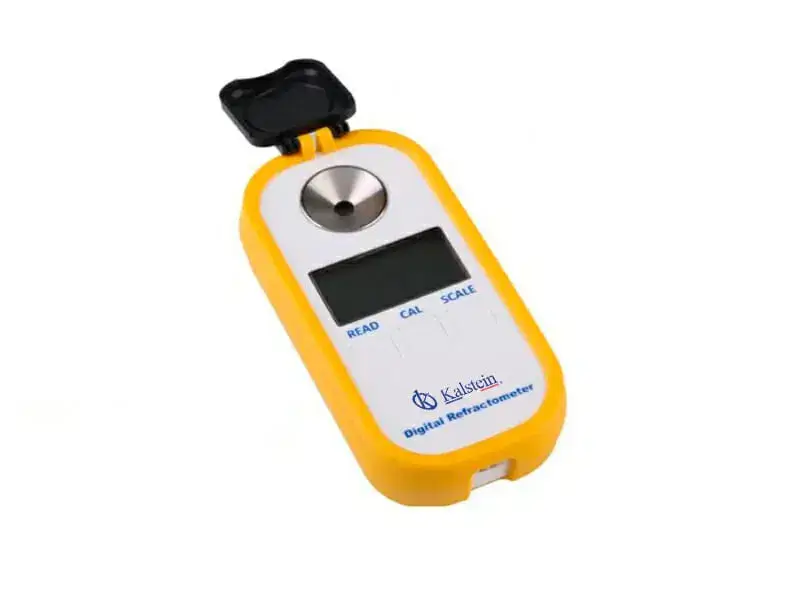
Digital Salinity Refractometers: Applications and Best Practices 2026
What is it used for in 2026
Digital salinity refractometers are essential tools in various laboratory settings. They are used primarily to measure the salinity of various solutions, including seawater and sodium chloride solutions. Their precision in measuring refractive indices makes them invaluable for applications in biotechnology, environmental science, and aqueous chemistry. In 2026, these devices will continue to play a critical role in research and academia, helping scientists to analyze data related to salinity levels effectively.
History and evolution of the technology
The technology behind refractometers dates back to the early 19th century, when scientists first began to explore the relationship between light refraction and salinity. Over the decades, refractometers have evolved from manual, analog models to sophisticated digital devices equipped with features like Automatic Temperature Compensation (ATC). This development has greatly enhanced accuracy and user-friendliness, making it possible for more fields to benefit from salinity measurements. By 2026, advancements in digital technology will further refine the precision and usability of these instruments.
How to use it step by step
Using a digital salinity refractometer is straightforward. Here’s a step-by-step process:
- Preparation: Ensure the refractometer is clean and calibrated. Turn it on and allow it to stabilize.
- Sample Collection: Collect a small sample of the solution you want to test, ideally using a clean dropper.
- Application: Place a drop of the sample on the prism of the refractometer.
- Measurement: Close the cover and wait for a second, then press the read button to display the salinity reading on the digital screen.
- Analysis: Record the reading for your records and repeat the process as necessary for additional samples.
Best techniques and protocols
To ensure accurate measurements when using digital salinity refractometers, consider the following best practices:
- Always use freshly calibrated instruments for each measurement session.
- Avoid cross-contamination by using separate droppers for different samples.
- Allow samples to reach room temperature for accurate readings.
- Regularly clean the prism with distilled water to prevent residue build-up.
- Document all readings systematically to facilitate data analysis.
Practical applications by laboratory type
Digital salinity refractometers find applications in various laboratory types:
- Biotechnology Labs: Used for measuring the salinity of culture media and reagents.
- Environmental Science Labs: Measure salinity levels in water bodies for ecological studies.
- Aquaculture: Monitor salinity levels in aquaculture systems to ensure optimal conditions for fish and aquatic life.
Regulations, standards and certifications
Laboratories using digital salinity refractometers must adhere to certain regulations and standards to ensure the reliability of their measurements. This includes compliance with ISO standards related to measurement accuracy and quality assurance protocols. Certification of the devices should be checked against recognized standards to ensure their reliability in laboratory settings.
Comparison with alternative technologies
While digital salinity refractometers are popular, alternative technologies exist, including:
- Conductivity Meters: Measure ion concentration but can be less precise for salinity measurements.
- Traditional Refractometers: Analog devices that may require manual adjustments and can be less user-friendly.
Digital salinity refractometers offer advantages like higher accuracy, ease of use, and quick readings, making them the preferred choice in modern laboratories.
Comparison of available models
| Model | Best for | Key specs | Recommended use case |
|---|---|---|---|
| YR05953 | Measuring salinity in solutions up to 28% | 0.0--28.0%, ±0.1% accuracy | Ideal for low-salinity experiments in biotech labs. |
| YR05954 | Measuring very high salinity levels | 0--280‰, ±1‰ accuracy | Best for seawater analysis and marine studies. |
| YR05955 | Measuring density | 1.000-1.217, ±0.002 accuracy | Useful for chemical analysis requiring density measurements. |
| YR05956 | Measuring refractive index | 1.3330--1.3900nD, ±0.0003 accuracy | Applicable in research requiring precise refractive index data. |
| YR05957 | Measuring salinity up to 100‰ | 0—100‰, ±2‰ accuracy | Suitable for aquaculture and brackish water studies. |
| YR05958 | Measuring clinometer readings | 0--57‰, ±2‰ accuracy | Applicable in specific environmental studies. |
| YR05959 | Measuring density in finite ranges | 1.000-1.070, ±0.002 accuracy | Best for low-density solution analysis. |
| YR05960 | Measuring refractive index within certain ranges | 1.3330--1.3530nD, ±0.0003 accuracy | Useful in various scientific research applications. |
Common mistakes and how to avoid them
Laboratory professionals often make mistakes that can lead to inaccurate readings. Here’s how to avoid them:
- Improper Calibration: Always calibrate before use to ensure accuracy.
- Not Cleaning the Prism: Residue can affect measurements; clean with distilled water after each use.
- Ignoring Temperature Effects: Use ATC features wherever available to mitigate temperature impact on readings.
Maintenance, calibration and good practices 2026
Regular maintenance of digital salinity refractometers is crucial for their longevity and accuracy:
- Calibrate regularly using standard solutions to maintain precision.
- Keep the prism surface clean and free from contaminants.
- Store in a safe, dry place when not in use to avoid physical damage.
Cost-benefit analysis 2026
Investing in digital salinity refractometers in 2026 offers significant returns in terms of accuracy and efficiency. While the upfront cost may be higher than traditional models, the benefits of reduced error rates, ease of use, and faster readings justify this investment. With technology continually improving, the longevity and performance of these devices make them a smart choice for modern laboratories.
Frequently asked questions
What should I consider when choosing a digital salinity refractometer?
Consider factors such as measurement range, accuracy, user interface, and specific application needs. Choose a model that suits the salinity levels you will be measuring most frequently.
How often should I calibrate my refractometer?
Calibration should be performed before each use or at least daily if the device is used frequently. Regular calibration ensures accurate measurements.
Can I use tap water to clean my refractometer?
No, avoid using tap water as it may contain impurities. Use distilled water for cleaning to prevent residue buildup on the prism.
What is the impact of temperature on salinity readings?
Temperature can affect the density and refractive index of solutions. Using a refractometer with ATC features helps mitigate this effect by automatically adjusting the readings based on the temperature.
Are there any specific protocols for measuring salinity in aquaculture?
Yes, it is crucial to regularly monitor salinity levels to ensure optimal conditions for aquatic life. Use calibrated instruments and record measurements systematically.
Can I use a digital salinity refractometer for other types of measurements?
Some models are versatile and can also measure refractive index and density, expanding their application beyond just salinity.
How can I request a quote for a digital salinity refractometer?
You can easily request a quote through our online platform, where you can find detailed descriptions and pricing for our available models.
If you are looking for a fusion of innovation and quality, you have come to the right place. At Kalstein, we offer you the luxury of exploring our exclusive catalog of laboratory equipment. We manufacture every device to the highest standards of excellence. Our intuitive and seamless online purchasing channels are designed for your convenience, securing the most competitive prices. Hesitate no longer — we bring science to life, it is time to become part of our community.