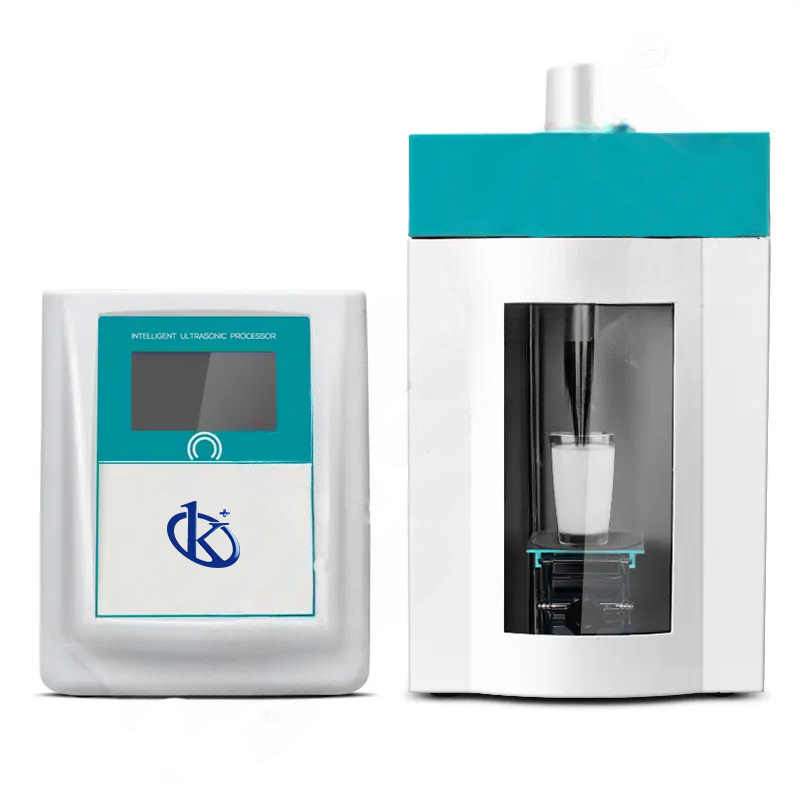
Ultrasonic Homogenizers: Practical Applications and Techniques 2026
Ultrasonic homogenizers are essential tools in modern laboratories, designed to achieve uniform mixtures, emulsions, and dispersions. These instruments utilize ultrasonic waves to facilitate the breakdown of particles within a solution. Their applications span a variety of fields, including biotechnology, pharmaceuticals, food technology, and materials science. This article delves into the practical applications, operational techniques, and best practices of ultrasonic homogenizers in 2026.
What is it used for in 2026
In 2026, ultrasonic homogenizers are primarily used for:
- Cell Disruption: Breaking down cell walls for extracting proteins, DNA, and other cellular components.
- Emulsion Formation: Creating stable emulsions in food and cosmetic industries, enhancing product texture and stability.
- Particle Size Reduction: Reducing particle size in various materials to improve solubility and product quality.
- Dispersion: Dispersing powders in liquids to achieve uniform mixtures, crucial in chemical and pharmaceutical applications.
History and evolution of the technology
The concept of ultrasonic homogenization dates back to the 1950s when researchers began exploring the effects of high-frequency sound waves on liquids. Over the decades, advancements in technology led to the development of more sophisticated ultrasonic devices, incorporating digital controls and improved safety features. In the 21st century, the integration of touchscreen interfaces and automated data logging has further optimized their use in laboratories.
How to use it step by step
Using an ultrasonic homogenizer involves several key steps:
- Preparation: Select the appropriate probe size and type for your application. Prepare your sample by diluting it if necessary.
- Calibration: Ensure the device is calibrated according to the manufacturer's specifications.
- Settings Adjustment: Set the desired power, frequency, and duration of ultrasonic treatment on the touchscreen interface.
- Homogenization: Immerse the probe into the sample and start the homogenization process. Keep the probe submerged to prevent cavitation and damage.
- Monitoring: Monitor the temperature and, if required, set a cooling system to prevent overheating of samples.
- Completion: After the treatment duration, carefully remove the probe, and analyze the sample as needed.
Best techniques and protocols
To maximize the effectiveness of ultrasonic homogenizers, adhere to the following best techniques:
- Optimize Sample Volume: Use the recommended volume range for each device to ensure effective homogenization.
- Control Temperature: Implement cooling mechanisms to maintain sample integrity during processing.
- Adjust Parameters: Modify power settings based on the sample type for optimal results.
- Use Multiple Passes: For difficult-to-homogenize samples, consider running multiple passes at varying settings.
Practical applications by laboratory type
Ultrasonic homogenizers find applications in various laboratory types, including:
- Clinical Laboratories: For cell lysis in genetic studies and sample preparation.
- Food Laboratories: To create stable emulsions in sauces and dressings.
- Cosmetic Laboratories: For the formulation of creams and lotions, ensuring uniform texture.
- Pharmaceutical Laboratories: To prepare drug formulations requiring fine particle sizes.
- Research Laboratories: For material science applications, including nanoparticle synthesis.
Regulations, standards and certifications
In 2026, laboratory professionals must adhere to various regulations and standards, including:
- ISO 9001: Ensures quality management systems are in place for consistent product quality.
- Good Laboratory Practice (GLP): Guidelines that ensure quality and integrity in research.
- FDA Regulations: Compliance for devices used in pharmaceutical and food production processes.
Comparison with alternative technologies
When comparing ultrasonic homogenizers to alternative technologies such as high-pressure homogenizers and bead mills, several factors emerge:
- Efficiency: Ultrasonic homogenizers are typically more efficient for smaller volumes and delicate samples.
- Cost: Initial investment for ultrasonic homogenizers might be lower compared to high-pressure systems.
- Ease of Use: Ultrasonic devices often have more user-friendly interfaces and require less maintenance.
Comparison of available models
| Model | Best for | Key specs | Recommended use case |
|---|---|---|---|
| YR05015 | Small sample homogenization | Power: 1.5-150W; Capacity: 0.1-150 ml | Cell disruption and emulsification in small volumes. |
| YR05016 | Medium sample processing | Power: 2-5-250 W; Capacity: 0.1-300 ml | Effective for laboratory-scale formulations. |
| YR05017 | Large sample preparation | Power: 10-650 W; Capacity: 0.1-500 ml | Ideal for large-scale research applications. |
| YR05018 | High-performance applications | Power: 10-900 W; Capacity: 0.1-600 ml | Advanced emulsification and dispersion tasks. |
| YR05019 | Industrial applications | Power: 20-1,200 W; Capacity: 1-1,000 ml | Suitable for production scale homogenization. |
| YR05020 | High throughput scenarios | Power: 50-1,800 W; Capacity: 1-1,200 ml | Best for continuous processing and large volumes. |
Common mistakes and how to avoid them
To ensure optimal performance and avoid pitfalls, consider these common mistakes:
- Incorrect Probe Use: Always select the appropriate probe size for your sample volume to prevent inefficient homogenization.
- Ignoring Temperature Control: Failing to monitor temperature can lead to sample degradation; use cooling methods as needed.
- Not Following Manufacturer Guidelines: Each model has specific operating instructions that must be adhered to for safety and effectiveness.
Maintenance, calibration and good practices 2026
Regular maintenance and calibration are crucial for ultrasonic homogenizers:
- Routine Cleaning: Clean probes after each use to prevent contamination.
- Calibration Checks: Schedule regular calibration based on usage frequency to ensure accuracy.
- Monitor Performance: Keep records of performance metrics to identify any deviations.
Cost-benefit analysis 2026
In 2026, the cost-benefit analysis of ultrasonic homogenizers is favorable for laboratories:
- Initial Investment: While costs may vary, the return on investment is often seen through improved efficiency and quality of results.
- Operational Costs: Lower maintenance and energy costs compared to some alternative technologies.
- Enhanced Product Quality: The precision and effectiveness of ultrasonic homogenizers lead to better product outcomes, justifying the expense.
Frequently asked questions
What factors should I consider when choosing an ultrasonic homogenizer?
Consider factors such as sample volume, required power, and specific application needs. Ensure the model you choose fits the scale and complexity of your work.
How can I prevent overheating during the homogenization process?
Use cooling systems, such as ice baths or external cooling devices, and monitor the temperature throughout the process.
What is the recommended cleaning procedure for ultrasonic probes?
Clean probes with a suitable solvent immediately after use, followed by rinsing with distilled water, and ensuring they are free from residues.
How often should I calibrate my ultrasonic homogenizer?
It is advisable to calibrate based on usage frequency, ideally every month or after a significant number of uses, or if performance metrics suggest deviations.
Can ultrasonic homogenizers be used for all types of samples?
While versatile, ultrasonic homogenizers may not be suitable for every sample type, particularly those prone to heat degradation. Always verify compatibility with your material before use.
How can I ensure safety when using an ultrasonic homogenizer?
Follow all manufacturer guidelines, wear appropriate personal protective equipment, and ensure the workspace is free from hazards during operation.
Where can I request a quote for ultrasonic homogenizers?
For a personalized quote on ultrasonic homogenizers, reach out through Kalstein Plus, where you can explore your options.
If you are looking for a fusion of innovation and quality, you have come to the right place. At Kalstein, we offer you the luxury of exploring our exclusive catalog of laboratory equipment. We manufacture every device to the highest standards of excellence. Our intuitive and seamless online purchasing channels are designed for your convenience, securing the most competitive prices. Hesitate no longer — we bring science to life, it is time to become part of our community.